
Glimpses of Unfamiliar Japan – A Review
Between 1890 and 1904, Lafcadio Hearn lived in Japan and wrote two books about his experiences.
Ask anyone on the street – and, in a way, I have – where they would like to visit, and the answer is invariably Japan. For better and for worse, the land comprised of around fourteen thousand islands seems to hold an endless charm for Westerners.
Hearn was one of those enthralled outsiders, a man of Greek-Irish lineage who found his home in Japan, passing his final years with his wife and child, feeling a sense of belonging that had seemingly eluded him in his younger years. His journey is still relevant today: a love letter to a people and their culture, and a tale of fantasy versus reality – that dizzying cocktail of what Japan is and what we want it to be.
The oni is in the detail
Hearn wrote detailed notes about everything, and he took to his new life with gusto. He was a proto-Bill Bryson, offering insights to would-be travellers from his own time. Reading it now, well over a century later, it is a gorgeous time capsule of a gone-by era. Which is apt, as Hearn was preoccupied greatly with the sense that Japan was losing its essence as it modernized and opened to the West. (Something that has echoes in modern Japanese politics.)
His enthusiasm is infectious. When he wants to buy everything in tourist shops, he is relatable. And as his narrative starts with breathless brush strokes of this new, alien society, before giving way to a more useful and considered approach, we accompany him as he settles in and integrates.
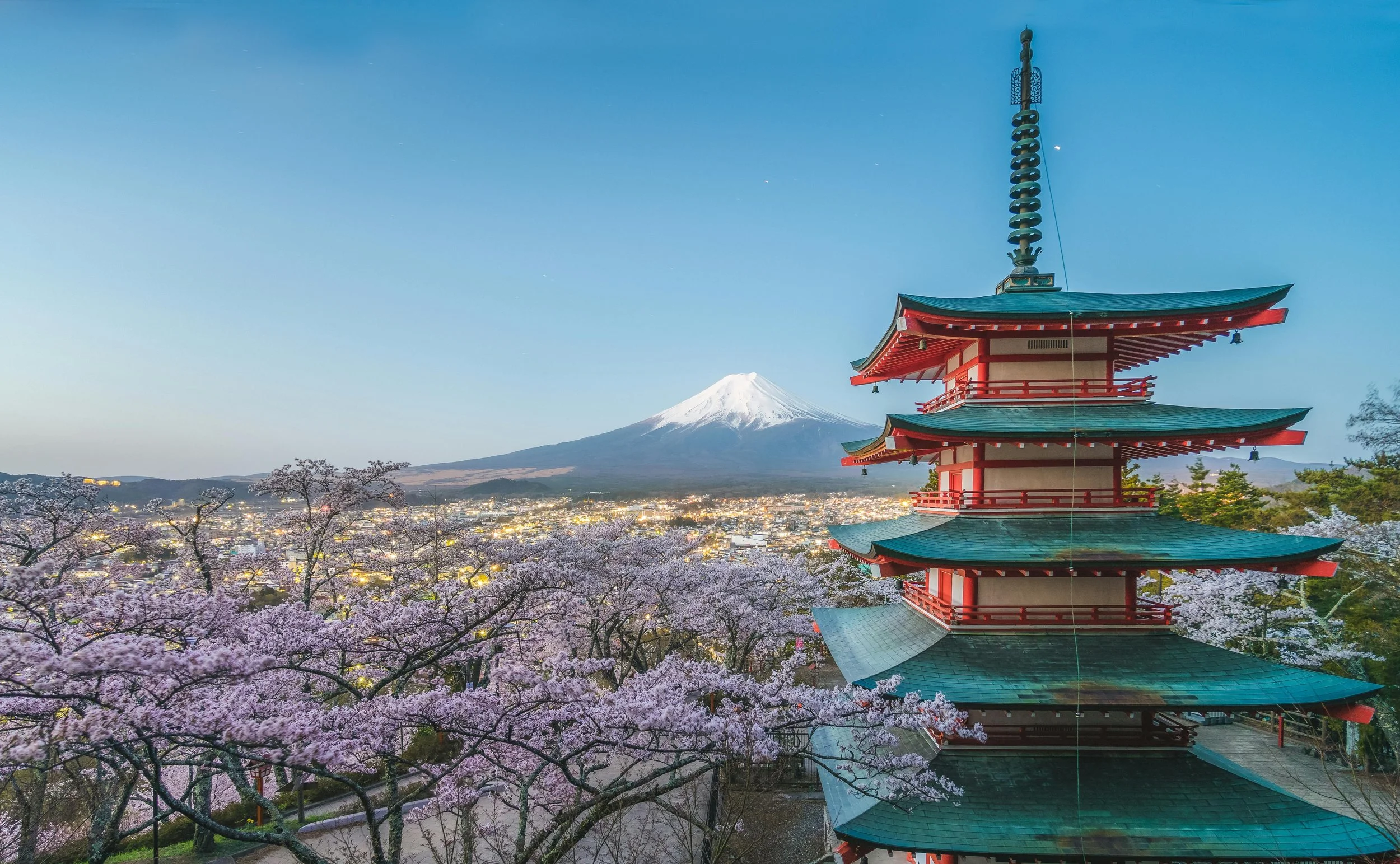
Photo by Nguyen Khac Tien: https://www.pexels.com/photo/the-churei-to-at-the-arakurayama-sengen-park-12544861/
Through our erstwhile narrator, we learn about the plots of long-forgotten plays, the superstition around foxes (and much more), travelling carnival shows where the ‘world’s largest rat’ was actually a kangaroo, and wind-up toys that sang and moved. In between the many myths, there are accounts of fading samurai, lost in a modernizing world, and the grim fate of retired geishas, women sold into servitude and then abandoned in their golden years.
Nevertheless, this detailed approach doesn’t always work – a barrage of placenames and myths can sometimes tire the reader as anecdotes and observations blend together. This is ‘unfamiliar’ Japan after all, and there are no SparkNotes. Occasional footnotes add some context, but even they can extend across a couple of pages as they are dense with information.
A sensation
There is too much in the book to mention. There are stories of besotted men enlisting priests so they could find out if their love was reciprocated. The spirit of the woman would take over the priest’s body and speak through him. There is a whole essay about the differences between a Japanese and a European garden.
And then, there is Hearn himself. In many places, he drew crowds of hundreds. In hotels, heads would pop into his room and gently observe him, before popping out again. (We learn that there is little privacy in Japanese hotels.) On the street and in restaurants, he was a sensation, but the crowd always treated him with deference and respect.
The behaviour of Japanese people throughout the book, according to Hearn, is exemplary. Even rough sailors cause little disruption, unlike their European counterparts.
Japanese smile
From The Simpsons to blogs by Japanese air hostesses and beyond, the idea of the enigmatic Japanese smile has provided much fodder for conversation and reflection. In Glimpses of Unknown Japan, Hearn was specifically tasked by a friend to work out why the ‘natives’ smiled so much.
「As an aside, Hearn had links to Ireland but spent little time there. In fact, he belonged to the British ruling class, so many of his contemporaries in Japan were from Britain, and some carried with them a sneering disregard for the locals.」
Across three genuinely shocking anecdotes, Hearn showed how two English gentlemen and one gentlewoman, by turns, drove an ageing samurai to hara-kiri, laughed at a recent widow holding an urn, and smashed a peasant on the head with a whip handle. All because the serene smiles of the Japanese person in front of them provoked an irrational ire.
Hearn wrote an in-depth essay delineating the reasons for the so-called Japanese smile. To condense his thoughts, he attributes this sanguine inscrutability to Confucism and an overriding desire to maintain social cohesion. Things one can read about today when Googling Japanese business etiquette.
Sayonara!
The last chapter of the book is titled with this Japanese greeting, and this linguistic flourish – it’s the only chapter heading in Japanese – epitomizes a certain tension that is a through-line in the book.
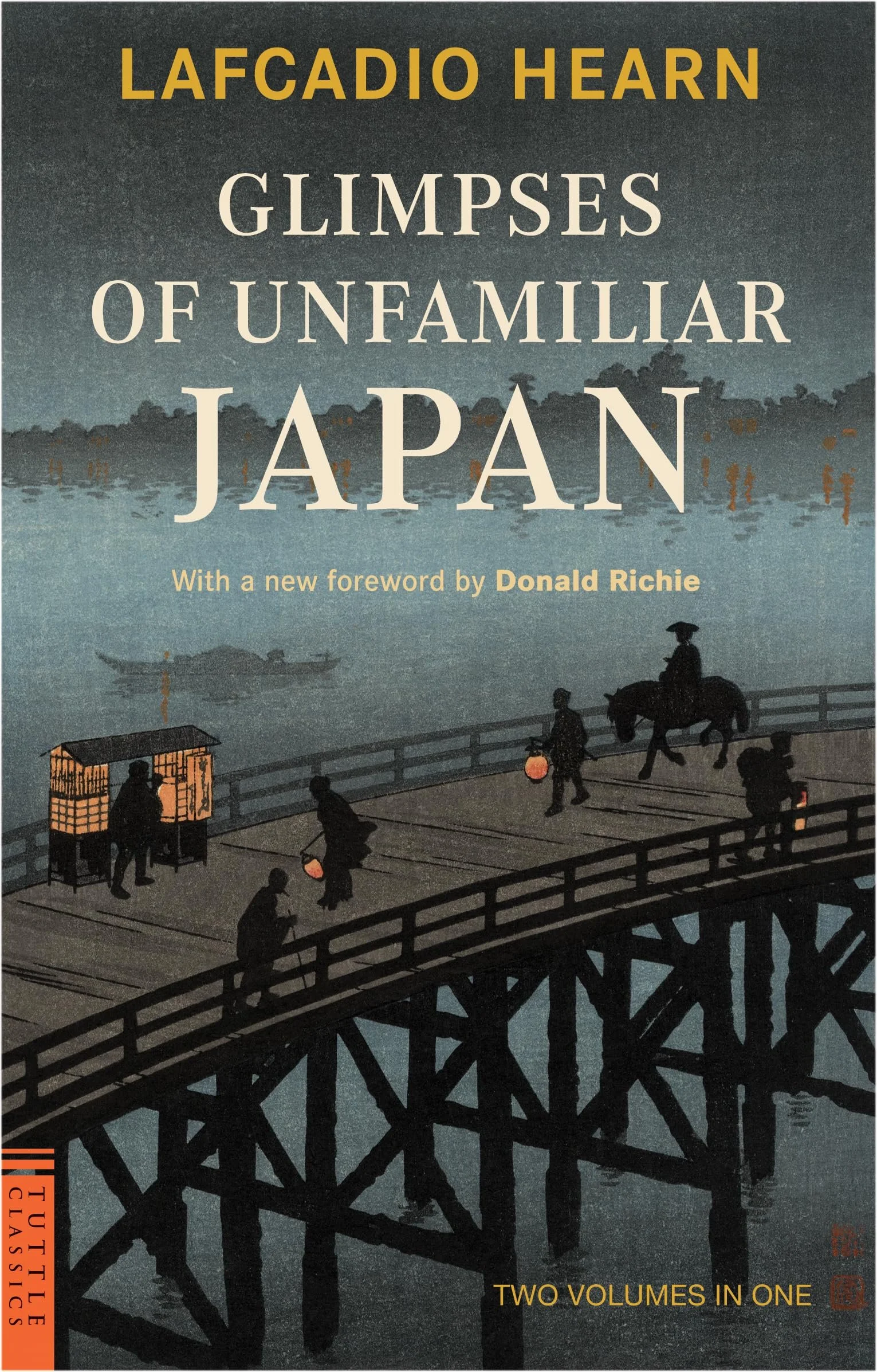
This edition by Tuttle Classics.
Despite Hearn’s 19th-century biases, he was more open than most of his countrymen. The reprinted letter from his students shows a real sadness at his departure, and the fact that students, teachers and parents escorted him to his steamer ship – ahead of his relocation to another part of Japan – denotes a certain sense of love and respect… unless they were happy to see the back of him.
As mentioned, the book has its peculiarities. He never references his wife, but the pretty girls from different prefectures find their way into the pages. An anachronistic celebration of militarism and manhood sometimes creeps in; a reminder that some shadows exist in the Land of the Rising Sun. But overall, the delights and awe that flesh out the story make for a mostly engaging read. Even if you can’t distinguish between samurai and sushi, and you are one of those rare people who is not a Japanophile, there is still something to enjoy in this two-volume collection.
And remember…
You can find more reviews on our blog, more stories on our podcast, and more books on our website.
ありがとう
Arigatō!
