By Lynn Amass Hardy
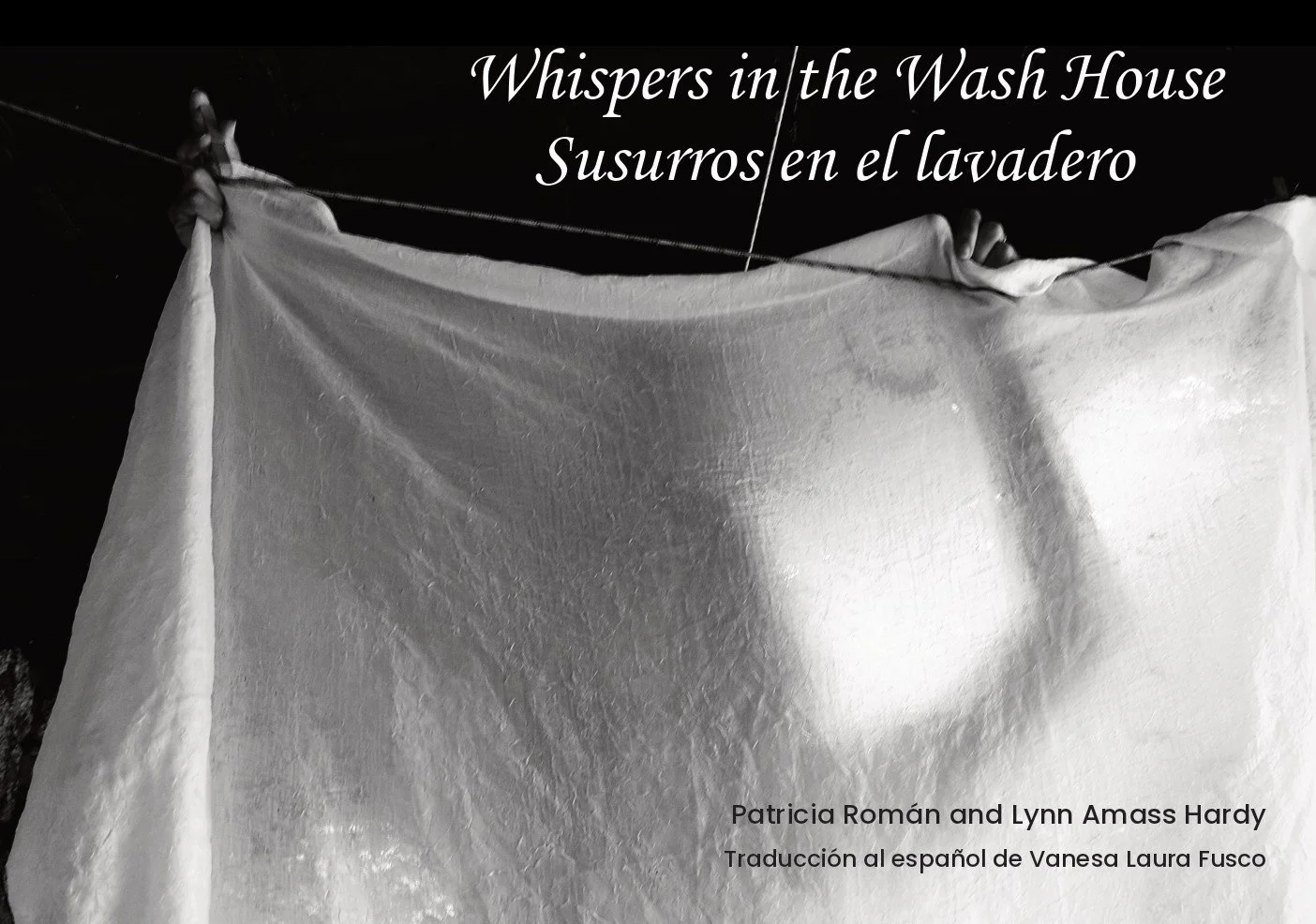
Whispers in the Wash House invites the viewer to hone in on a particular event, a day in the life of working class women, gallantly carrying out their domestic chores inviting the reader to witness the camaraderie between them as their families and friendships grow amongst the laundry.
Whispers is a stark contrast to our brightly coloured, continually shifting, social media lives. The sober black and white images allow the viewer’s eye to relax so that the imagination can be seduced by the lyrical tone of Patricia’s words which transport the reader to a place and time, long forgotten. The monochrome images mounted on black pages create an environment similar to an antiquated photo album which has been treasured and handed down throughout the generations.
Patricia’s words invoke both natural and domestic scenes. With a simple connection between the female form and domestic objects, the reader begins to understand a woman’s character through the musculature of her arms and hands as she engages with soap, scrubbing brush and water. It was very easy for me to create images for Patricia’s words because her verses are so rich and complete.
What has been lost between humans
Society today has its modern domestic appliances where the washing machine does the hard work without us even being present, I wonder what has been lost between humans, nature and time? Whispers not only shows us the importance of the bonds between neighbours and friends but it also conveys the connection that the women had with something as simple as running water. From the spring well, through the water channels passing through the mountains to the wash house.
As a photographer concerned mainly with formalism, my interests fell to the places, objects and landscapes based around the theme of the wash house, but as I read Patricia’s descriptions, I began to grow more sympathetic towards the characters of the women who would have toiled in their. I tried to conceal these characters in the shadows of the images and sometimes allow a glimpse of them by using light to caress a hand, hair or a dress. The domestic tools such as the washing line, the soap, the and bundle of clothes also became characters that accentuate these strong, resilient leading ladies and hopefully, somewhere in the compositions, between the cracks in the brick work or amongst the folds of the cloth, the viewer can also sense the laughter, fragility and pain held by these women.
An archive of the past
In its own way, Whispers in the Wash House is an archive of the past, a gentle reminder of how brutal life could be. As the reader follows these relentless characters throughout their tiresome day, we are reminded about how easy our modern day lives are when compared to the not-so-distant past.
Whispers also acts as a form of counsel, reminding us that as a species, we are on the brink of losing our connection to one another and most importantly our bond with Mother Nature. Whispers inspires the reader to converse with neighbours and fellow workers and also to live beside the spirit of nature as we read about the sun, mountains and water. Thankfully, modernisation has given us more quality time to enjoy life. Hopefully, Whispers reminds us exactly what that enjoyment could be, laughter, song, dance, or even the fulfilment of an honest days graft.
And remember...
You can buy the book here and find more culture on our podcast.