
Seven Wonders, One More Question Trip to Rome, Italy
By Henna Soneta
You know that one title sequence from Phineas and Ferb: “There’s 104 days of summer vacation, and school comes along just to end it”? Well, that is exactly how my friends and I felt after spending over five weeks in Madrid and realizing we were down to our last five days. The last five days before we had to leave this alternate reality. The last five days before we had to leave behind the stone pavements of Sol, along with the 4 a.m. shouts echoing through the streets. Before we stopped laughing about how ten gelato stores could exist within a mile of each other and somehow all stay in business. Before we said goodbye to the flights that had turned Europe into something that felt almost as accessible as taking a road trip across the United States.
Studying abroad had become so much more than simply taking a class over the summer that was worth three credits. It was about how every night became a new adventure, a new story, a new food, a new place, and a new memory. It was painting pottery with my boyfriend at a local pottery studio for our one-year anniversary. It was trying four-cheese pizza and realizing that, unfortunately, blue cheese was not for me. It was getting lost in the Madrid subway because we took the wrong track, ending up nowhere near where we were supposed to be, and deciding to make the most of it anyway. Sometimes getting lost meant discovering something we never would have found if we had stayed on the right path.
It was going to the open markets every Sunday in El Rastro, and visiting the Temple of Debod in Madrid, watching the sun set behind the Royal Palace. It was seeing young couples laying against each other in Retiro Park. It was wondering at a clip of a woman repeatedly saying “yes sir” at the Reina Sofía Museum. These moments were random, sometimes insignificant, and probably forgettable to anyone else. But to us, they became the pieces that made Madrid feel like home.
Madrid was not something I was ready to say goodbye to yet. And I wasn't sure if it was Madrid itself that I was going to miss or the autonomy I had felt while I was there.
There was no bedtime. No Organic Chemistry exams that required pulling an all-nighter. No need for a car, just a metro card and Google Maps to tell you where to go. There was barely any need for planning ahead. We could look at Ryanair, find a cheap flight, and then try to stuff everything we needed into a backpack that, just a few months earlier, could barely hold my schoolbooks. Now, somehow, that same backpack was supposed to hold enough clothes and necessities for another country.
Maybe that was why, when my friends and I sat around a circular table at Mazel Bagels, we decided our last trip had to be the best one we had taken all summer. If we were going to end the high of studying abroad, we wanted to end it with a final adventure that felt worthy of everything that came before it.
There wasn't any other country that felt more fitting for a final hurrah than Italy.
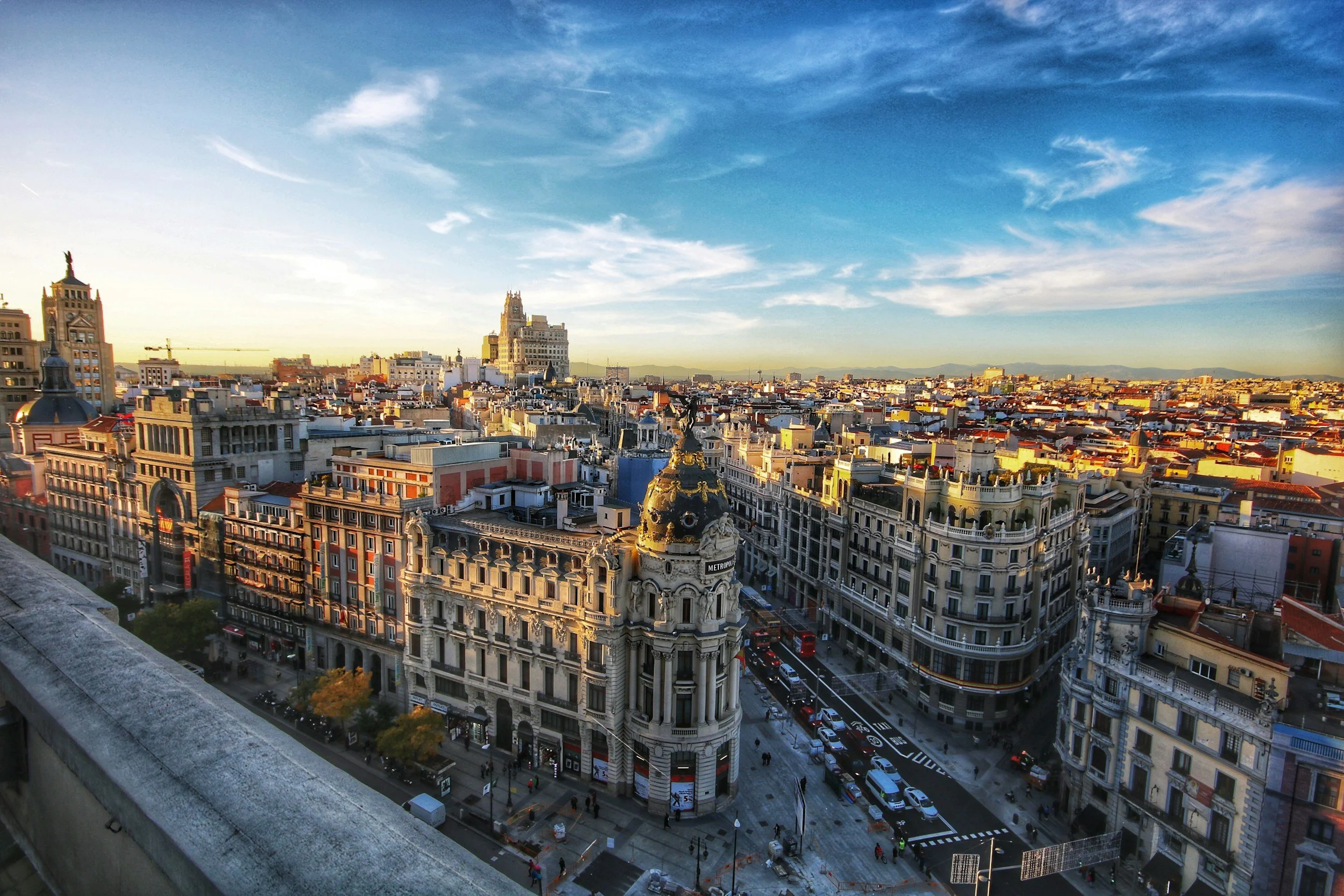
Photo Credit: Jorge Fernández Salas @ Unspash.com
Budapest, Rome and Venice
Now, none of my friends and I are particularly good at geography, which is not exactly ideal when you're trying to plan a five-day trip across four possible cities. But with the help of our very handy planner, ChatGPT, we eventually settled on three: Budapest, Rome, and Venice.
Everything about Budapest and Venice seemed to live up to what we had imagined. There was the Prosecco wine tour, where the sunset over Budapest cast a glow behind the Parliament Building as we tasted wine. There was the thrill of bargaining in Venice for Italian purses, a moment my Asian parents probably would have been proud of. There were beautiful streets, unfamiliar foods, and the feeling that we were constantly stepping into another postcard.
But the one city that didn't sit right with me was Rome.
Rome, the city known for thousands of years of history, monumental architecture, world-class museums, and Italian culture, was the city that disappointed me the most.
And it wasn't because I had carelessly left most of my souvenirs from Budapest and Rome at our hostel, although I still think about the fluffy monkey wearing a Budapest shirt that I wish I had brought home. It was something deeper. It was the way Rome exists now.
There was something uncomfortable about seeing such an ancient city surrounded by a world that had become so modern. In Rome, I felt like I could see both worlds sitting directly next to each other. Ponte Sant'Angelo, for example, was built to connect Rome across the Tiber River to Hadrian's massive mausoleum, creating a path for Roman processions and future visitors to the famous Roman tomb. Yet when I stood there, I was also surrounded by modern streets, tourists, cameras, and even a premier set for a new Spider-Man movie.
It was striking to realize not only how well these monuments had been preserved, but how completely their roles had changed. Places that were once built for religion, politics, entertainment, and everyday life now existed within a city shaped by tourism and modern life. The more we explored Rome, the more I began to notice this contrast everywhere.
At the Trevi Fountain, for example, something that had once been part of the everyday life of ancient Rome had become one of the city's biggest tourist attractions. Even participating in the tradition of throwing a coin into the fountain required a ticket. Later, on our way to the Colosseum, my friends and I rode together on the back of a Lime scooter, which we quickly learned was definitely not meant for two people, passing markets filled with Louis Vuitton and Prada along the way. Then, almost suddenly, the modern stores, scooters, and busy streets gave way to the Colosseum.
And the Colosseum was incredible. It was grand, beautiful, and completely deserving of the awe surrounding it. Standing in front of something that had existed for nearly two thousand years was surreal. Yet the more I looked at it, the more complicated that feeling became. Because while I was amazed that something so old could still stand, I was also confronted with how differently we experience it today.
It was a wonder, but to me, it was a wonder that felt barbed.
To enter the Colosseum, we needed a ticket and had to wait in line. Barriers surrounded the structure, controlling where visitors could go and what they could see. The Roman Forum was similarly gated off to protect it, which I completely understood. These structures are thousands of years old, and preserving them is necessary. But there was still something strange about standing in front of a place that once served such a central role in Roman life and now experiencing it almost entirely as a tourist attraction.
At times, I felt less like someone experiencing history and more like someone walking through a zoo, looking at something incredible, taking a picture, reading a short description, and then moving on to the next attraction.
Experiencing Rome
Maybe that was the problem.
Maybe it wasn't Rome itself that felt artificial. Maybe it was the way I was experiencing it.
I was checking off tourist destinations without really understanding the culture behind them. But at the same time, that seemed to be what everyone else was doing too. There was something strange about standing next to a structure that had survived thousands of years while a gelato shop, a luxury store, or a souvenir stall sat only a few feet away.
The monuments were beautifully maintained. They looked almost exactly how I imagined ancient Rome would look. And yet, somehow, that was what made them feel artificial.
It reminded me of The Lorax, where the single Truffula tree is preserved while everything around it has been transformed into something completely different. The tree still exists, but its environment, the world that once made it what it was, is gone.
Maybe that was what bothered me about Rome.
The monuments were still there, but the world that created them wasn't.
Italy was beautiful. One hundred percent, yes. Rome was full of culture. One hundred percent, yes. But Rome has also modernized. And it has to.
It has to keep up with other cities. It has to make money. It has to accommodate millions of tourists. It has to keep its streets clean and safe. It has to protect its monuments while still allowing people to experience them.
It has to modernize.
But standing there made me wonder what happens when the present becomes history.
What will these monuments feel like in another thousand years? In ten thousand years? How will they be preserved? How will people experience them? Will they still feel like the original structures, or will they have been repaired and reconstructed so many times that the original becomes almost impossible to distinguish from the artificial?
Maybe one day, the Colosseum will no longer be something people simply walk past on the street. Maybe it will sit inside a building, protected behind glass, with people paying thousands of dollars just to see a glimpse of what the world used to look like.
I wonder
I wonder.
I wonder about these seven wonders of the world.
Why do we call them the “wonders” of the world?
Is the name only asking us to admire their incredible craftsmanship, beauty, and historical importance?
Or is it also asking us to wonder about something bigger?
To wonder where we will be in the future. Where society will be. What will happen to the things we build today? Whether the things we consider important now will still matter thousands of years from now, or whether their importance will become even greater because they survived us.
I went to Rome expecting to see the past.
Instead, I found myself thinking about the future.
And I guess, for now, we will just have to wait, and continue to wonder.
And remember…
You can read ore of Henna’s work in this blog post, and you can check out our podcast, and more books on our website.
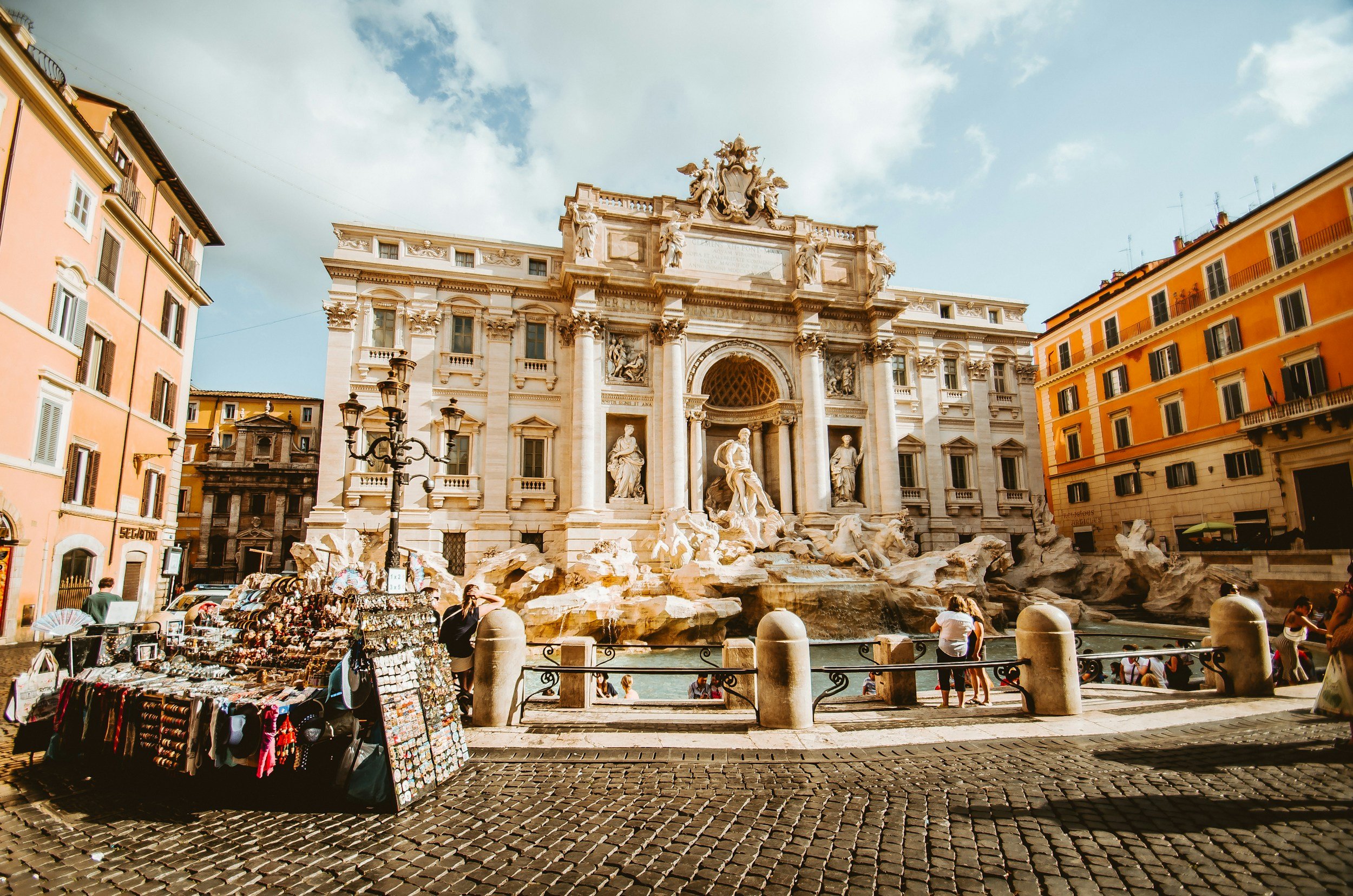
Photo Credit: Chris Czermak @Unsplash.com