
Tarragona: A rambla like no other
By Stephen Rossiter,
A Rambla like no other. Lined with plane trees, benches, ornate lampposts, a gentle incline over one kilometre that leads to an imposing statue of Roger de Lluria - the brilliant naval tactician of the Middle Ages - bedecked in flowers, and the balcony that overlooks Milagro beach below, the random spread of anchored ships in the bay that light up the night with a romantic festoon, and the port that welcomes them and their tonnage unseen.
The old quarter. A maze of cobbled, narrow, snaking streets that radiate from the cathedral whose parvis invites photographers and whose façade depicts the day of judgement, the apostles and Mary in the mullion. Cafes and bars abound.
Zoom out and gaze at the amphitheatre with the Mediterranean backdrop, cerulean sky blending beautifully with white blocks of curving stonework, housing heaps of history. And beyond, the aqueduct crossing the parched landscape, high and mighty. The Roman tourists made their mark!
Gaze out, gaze in, gaze at the city that feels like a town. Move among the masses in the evening, strolling, cajoling, heaving with the heat of summer, the light that spangles the serene sea, the streets and squares that seat in amorphous clusters the gregarious gatherings, ready to laugh and linger and throng midnight with revelry and raucous braggadocio.
My city
This is Tarragona. My Tarragona. From my early twenties to my early sixties, I have grown with this city. I have learned Italian in its university, I have received Spanish guitar tuition in its old flats overlooking Fountain Square, I have delighted in dalliances with its Colombian residents, I have taught English here, I have listened, lost to its Catalan pronouncements, I have entertained my parents and siblings here, I have studied an Irish dictionary on Arrabassada beach here, I have been given a send-off here with a private concert by a friend, Gemma, a student of opera and her piano-student companion, Carlos. I have lived here, I have loved here and I have loved life here, lavishly, on little money.
The swallows swoop, the waves break silently on Milagro beach, bathers still lingering below, the evenings fade gloriously into tangerine and life begins anew in this city that gave me a living, that made me fluent in the Spanish language and its joie-de-vivre, that made me drunk on JB, the ubiquitous Spanish bar Scotch, that cleansed my mind while paddling my feet in the warm sea’s waters and cleansed my palate with that salty sparkling water, Vichy Catalan.
Spring and autumn
And so, I return, spring and autumn. Taking in the tattle and the tone of Catalan conceit. The invasion of cruise ships contrasting with the eking out of a living locally with coins and cries. And then the next fiesta, say Santa Tecla, the city’s patron saint. The community spirit, the parades passing through thronged neighbourhoods, the tables set outdoors for family and friends, the rock bands raising the outdoor roof, the children dancing after dark, the laughter lighting up the night, the wine and beer elevating the cheers, the warmth stilling the air.
And the human towers, that uniquely Catalan tradition dating back to the eighteenth century and recognised by UNESCO as an Intangible Cultural Heritage. The castellers building their tiers in front of the town hall or the cathedral, up to ten high, the summit a child wearing a helmet and raising an arm tentatively before the controlled disassemble. All so visually arresting, all exemplifying courage, teamwork and identity.
And these towers inspired my novella’s title, the main protagonist’s duality of impregnable exterior and fragile inner self, capable of collapsing quickly under extreme pressure. A story about risk - emotional, romantic and existential. Two adults briefly building something beautiful, knowing that it may not last, an ode to middle-age, where hope refuses to be extinguished. And a personal story that I have been building with this city for most of my life now.
Fun and freedom
Catalonia is community. It is freedom of expression, it is fun. It doesn’t wait for one day a year to express its identity. Cities, towns and their neighbourhoods within, all vying to celebrate throughout the calendar, all waiting their turn to proudly put together days of revelry. Each town boasts several clubs in which to learn the trade of these human towers and several churches to produce religious brotherhood processions for each night of Holy Week. Young and old, male and female, the exhilaration, the solemnity but, whatever the occasion, they command awe and attention. The castellers and the nazarenos and the onlookers like me. Tarragona comes alive, Catalonia calls out. And its patron saint Sant Jordi, whose festival in April combines culture and romanticism, celebrating both World Book Day and Valentine’s Day, the exchange of books and roses. Life’s rich pageant!
And Sunday nights are unmistakable. Sit on the Rambla and watch the city spill out on the streets, taking the air, taking a stroll, taking a drink, a coffee, taking stock of another week in Tarragona. Together.
And remember...…
Us Human Towers is out now.
Find more stories on our podcast.
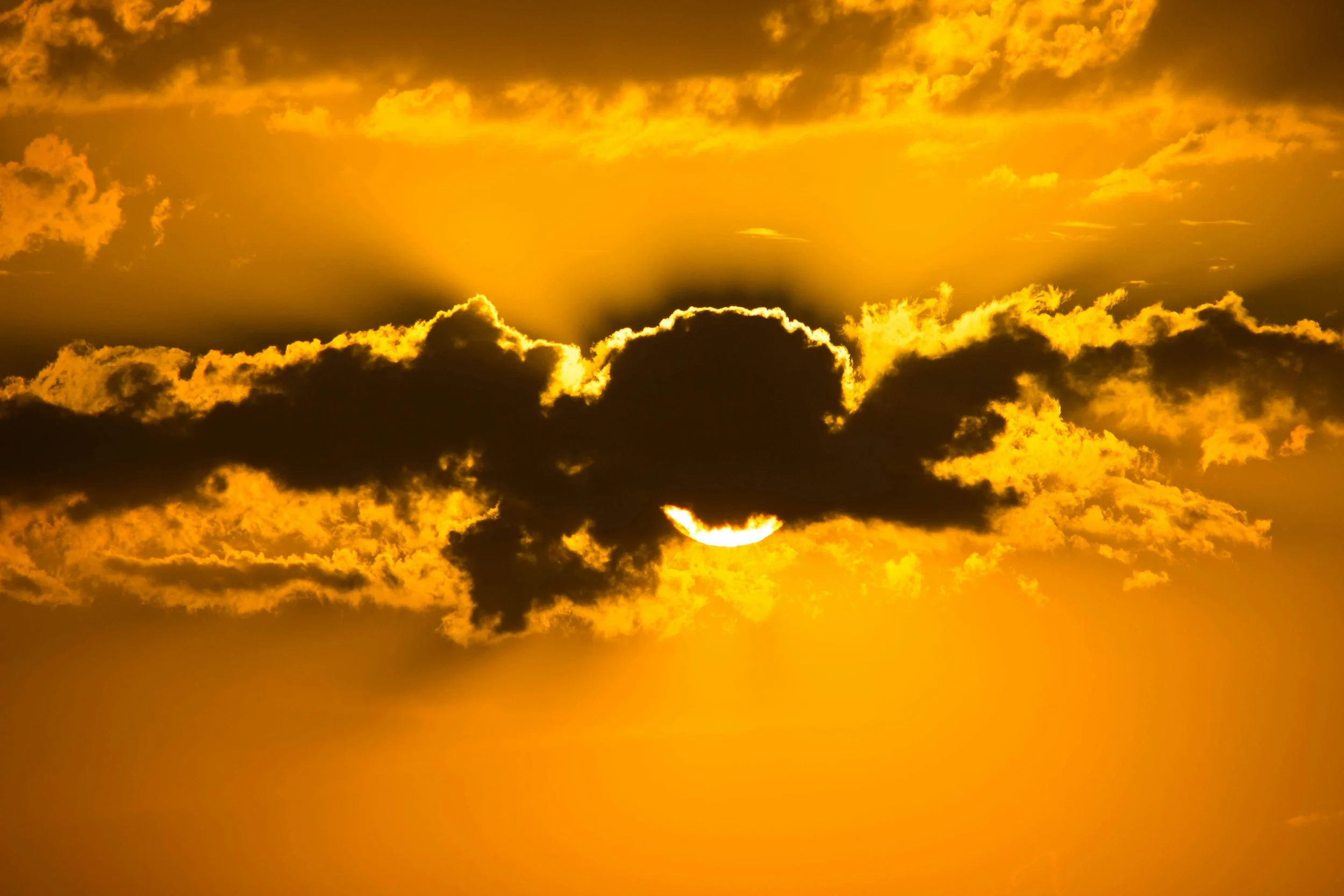
Photo Credit: Photo by Samer Daboul: https://www.pexels.com/photo/sun-hiding-behind-clouds-2672679/